
Your AI Can Read Everything. Who’s Asking Something New?
Your team has connected its AI tools to filings, earnings calls, market data and internal research. Analysts can retrieve information faster and ask questions across more material.
Then someone asks why customers are switching to a competitor.
The filings describe the market. Management offers an explanation. Earlier interviews provide some context. But the customers whose decisions matter have not been asked.
How does that question become fresh evidence your team can use?
01Where does the available evidence stop
A research tool can assemble a persuasive answer from the material it has. Your team still needs to assess whether that material addresses the question.
An older interview may predate a pricing change. Management commentary may describe the intended customer experience. An industry report may combine segments with very different buying behavior.
Make those limits visible. Identify the missing perspective, the period that matters and the decision the team is trying to understand.
A clearly defined evidence gap gives the next research step a purpose.
02Turn the gap into questions someone can answer
“Why are customers leaving?” is a starting point.
A useful interview guide gets more specific. What alternatives did the customer evaluate? Who made the decision? What changed in the renewal discussion? Which product limitations affected daily use?
The right participants matter just as much. A recent buyer, a former user and an implementation partner may explain different parts of the same decision.
Fresh research begins with judgment about whose experience is relevant and what that experience can establish.
03Keep the route back to the source
Once new interviews enter an AI workflow, the investment team needs a way to examine the evidence behind an answer.
Which interview supports the conclusion? What was the expert asked? Did another participant disagree? Does the observation apply to one customer segment or a broader market?
Recordings and transcripts allow the team to return to the underlying exchange. That matters when a concise answer leaves out a qualification or combines experiences that should be assessed separately.
The connection to the source is part of what makes the output useful for research.
04Fit the research into the firm’s environment
An integration needs to work within the firm’s approach to data access and AI.
Before connecting a research source, establish which users and systems may access it, how client restrictions apply and what material can move between environments. Firms using an internal model will have different requirements from teams using external assistants.
These decisions belong in the implementation discussion from the beginning.
The goal is to make approved research available where the team works, with a clear understanding of how it is accessed and used.
Give your tools fresh evidence to work with
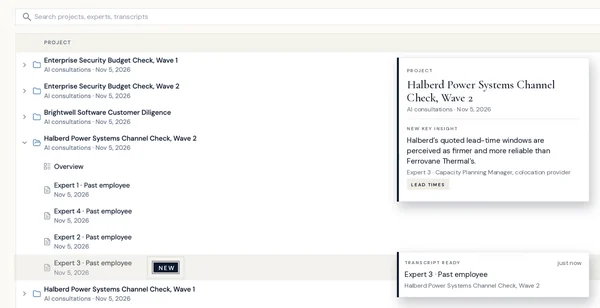
Seersite sources relevant experts and conducts AI-moderated interviews around clients’ specific research questions. Recordings, transcripts and findings build into a private Vault that teams can search, question and revisit.
Its MCP integration makes research accessible within supported Claude and ChatGPT workflows. For teams with different technology requirements, the starting point is a discussion of their environment and access needs.
Your firm’s questions can guide the creation of research that did not previously exist in its information sources. Each project gives the team new evidence to examine and future questions to pursue.
What question is your team asking that the available information still cannot answer?